

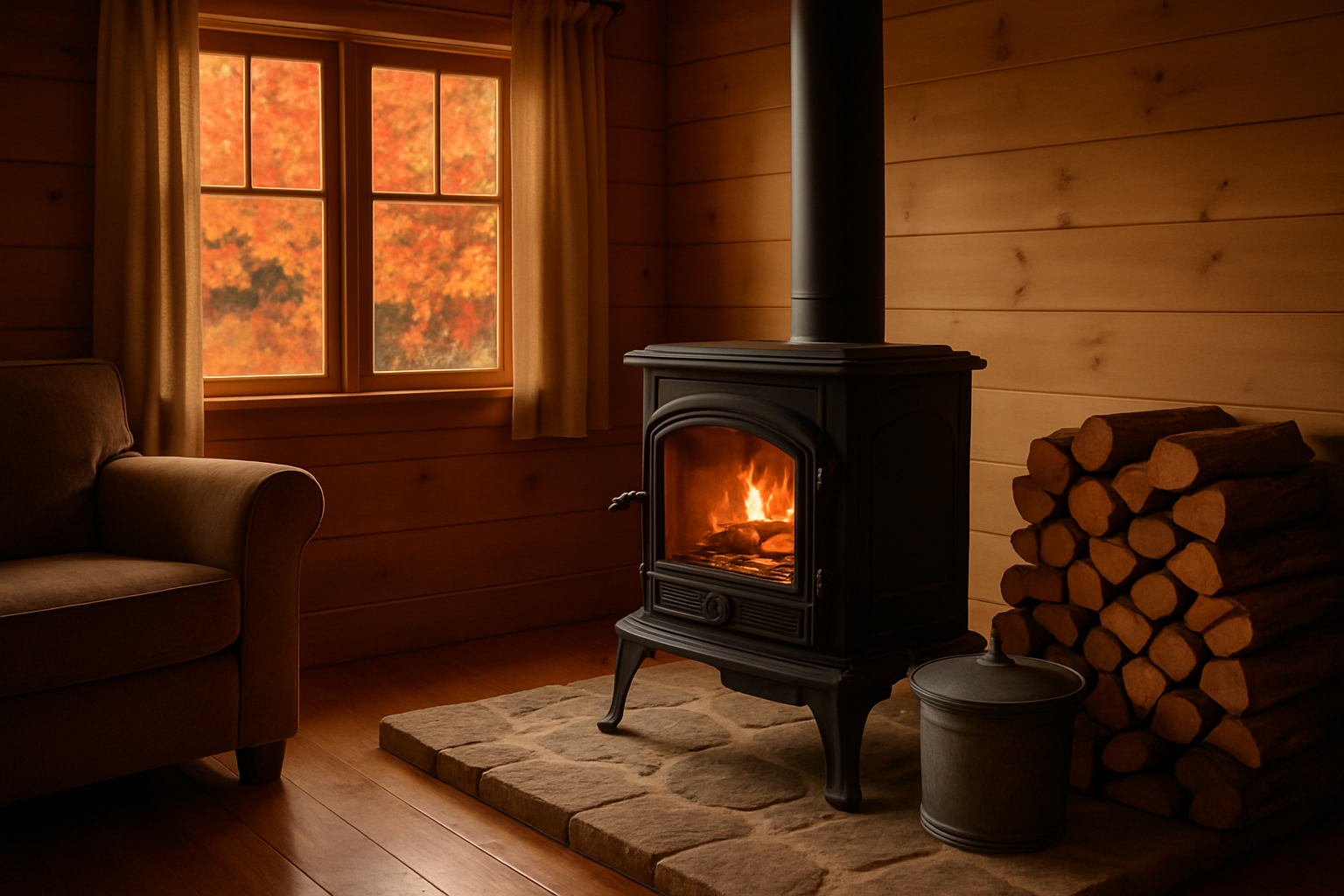
Wood Stove and Home Insurance: What to Do Before Winter
By late September, evenings cool down and many homeowners dust off their wood stove or reopen their fireplace. Would your home insurance cover a fire caused by your heating appliance if your insurer didn’t know it existed? Here’s what insurers generally ask for, what inspections to do before the first fire, and how to keep your home insurance aligned with your actual home.
Why your insurer cares about your heating appliance
A combustion appliance, a sooty fireplace, or an installation too close to a wall are among the common causes of residential fire. Since a fire represents one of the most expensive claims for a home, insurers ask specific questions about heating, especially when it burns wood or pellets.
What’s evaluated first is the type of appliance (stove, insert, masonry or prefabricated fireplace, pellet stove), then its age, how it was installed, and its role in the home. A stove used for ambiance a few evenings a month isn’t considered a primary heating system, and this distinction can change how your file is analyzed.
Declaring your appliance is not a trap. It’s the way to ensure your contract matches your actual home, not the one on file ten years ago.
What insurers typically ask for
Requirements vary by insurer and your profile. Some accept a simple declaration, others ask for proof of installation or maintenance. Remember that questions follow fairly consistent logic.
Having this information on hand speeds up quotes and avoids surprises when making a claim.
- The type of appliance and brand, with the model number from the manufacturer’s nameplate.
- The installation year and the name of the person or company that installed it.
- An invoice or document showing the installation follows the manufacturer’s instructions.
- Actual use: primary heating, supplemental heating, or occasional use.
- Date of last chimney sweep or fireplace inspection.
- Presence of functioning smoke and carbon monoxide detectors.
If you just bought the house
An existing appliance isn’t automatically properly installed. Ask the seller for available invoices and documents, and have the duct inspected before the first fire. Then notify your insurer of the appliance, even if the pre-purchase inspection found nothing.
If you’re installing an appliance yourself
Some insurers require professional installation, others accept DIY installation under conditions. Check with your municipality to see if a permit is required, then ask your insurer what they expect before hooking anything up.
Your checklist before the first fire
Late September is the right time: chimney sweeps and installers aren’t yet swamped by the first cold snaps. Take an hour to review your installation or entrust it to a qualified professional.
This routine protects your home and gives you maintenance proof to keep if your insurer ever asks for it.
- Have the chimney or duct swept at least once a year, more often if you heat heavily.
- Inspect the pipe and joints: rust, cracks, loose sections.
- Check clearances from walls, furniture, and ceiling per the manufacturer’s manual.
- Examine the floor protection under the appliance, which must be non-combustible.
- Test all smoke and carbon monoxide detectors and replace batteries as needed.
- Place an accessible fire extinguisher away from the appliance so you can reach it if flames appear.
Fireplace and duct
Creosote, that tarry deposit that builds up in the duct, ignites easily. Overly damp wood or an appliance burning at low temperature produces more of it. Regular sweeping and well-dried wood reduce the risk.
Clearances and flooring
Required distances are found in the appliance manual and take priority over habits or neighbor advice. A bookshelf edge, curtain, or woodpile too close is enough to create a hazard.
Ashes, wood, and pellets: problematic practices
Many fires don’t come from the appliance itself, but from what’s done with it. Ashes that seem cold can contain embers for several days. Putting them in a plastic bag, recycling bin, or wooden deck is a common mistake.
Use a metal container with a lid, placed on a non-combustible surface, at good distance from your home, garage, and garden shed. Leave it there for several days before disposing of it.
For wood, store it outside, away from walls, and keep inside only one or two days’ worth. For pellets, protect them from moisture and use only the fuel type specified by the manufacturer. Burning waste, treated wood, or flammable products to start a fire should be avoided.
- Never leave a fire unattended during a long absence.
- Avoid using flammable liquid to start or revive the fire.
- Keep children and pets at a safe distance from the appliance.
- Close the damper only when the fire is completely out.
Supplemental heating, heat pumps, and other appliances
Wood stoves aren’t the only appliances insurers care about. Overloaded baseboards, portable heaters plugged into extension cords, or space heaters left near curtains are also risky situations. Plug a portable heater directly into a wall outlet, never into a power bar.
If you add a wall-mounted or central heat pump to reduce your bill, notify your insurer. It’s a home improvement that may affect your insured amount or contract conditions. The same applies to a gas fireplace or new water heater.
If you’ll be away for several weeks this winter, heating becomes a different issue: maintain a minimum temperature, have the home checked regularly, and review your contract’s vacancy conditions. Before a long stay, also check your travel insurance to avoid leaving a gap in your protection.
After a claim: what can complicate settlement
In case of fire or smoke damage, the insurer seeks to understand the cause. If the appliance wasn’t declared, was installed improperly, or contract conditions weren’t met, the file can become more complex, and compensation may be contested or reduced. It all depends on your policy’s exact terms.
To protect yourself, keep a small file: installation invoices, sweep receipts, photos of the appliance and its clearances, manufacturer’s manual. A simple digital folder works fine.
Also review your amounts: reconstruction cost, personal property, and temporary housing expenses. A renovation or expansion since your last renewal may have changed the insurable value.
Premium impact and special cases for self-employed
A well-installed and maintained wood stove won’t necessarily increase the premium. In some cases, an undeclared or riskier appliance can result in a surcharge, additional conditions, or refusal to cover that specific risk. As a guideline, the difference varies greatly by insurer, region, home age, and your claim history. Comparing several quotes lets you see these differences before committing.
If you work from home, maintain a workshop in an outbuilding, or welcome clients, heating takes on another dimension: a mixed-use home isn’t always covered like a regular residence. Discuss this with your insurer and see if separate protection, such as business insurance, is relevant for your activity.
Frequently asked questions
Do I need to declare my wood stove to my home insurer?
Yes, it’s best to do so, even if it was installed by the previous owner. This allows the insurer to assess the risk and avoid dispute during a claim. How the appliance is handled varies by insurer.
Does a wood stove increase home insurance premiums?
Not necessarily. A well-installed, maintained appliance used for supplemental heating may have little effect, while primary use or questionable installation can lead to a surcharge. Premiums vary by your profile and insurer.
How often should I have my chimney swept?
Once a year is a good baseline for regular use, and more often if you heat heavily or burn damp wood. Also follow your appliance manufacturer’s recommendations. Keep your sweep receipt.
Can I install my wood stove myself?
Some insurers accept this under conditions, others require a qualified installer. Check with your municipality to see if a permit is required, then confirm with your insurer before installation.
What should I do with ashes after a fire?
Place them in a metal container with a lid, on a non-combustible surface, away from your home. Ashes can remain hot for several days. Avoid plastic bags, recycling bins, and wooden decks.
Does my insurance cover fire if my stove wasn’t declared?
It depends on your contract terms and circumstances. An undeclared or non-compliant appliance can complicate the claim or result in partial or full denial. To avoid uncertainty, declare your appliances and keep maintenance proof.
Is an electric supplemental heater also an insurance risk?
It can be if misused, for example plugged into an extension cord or placed near fabrics. Plug it directly into a wall outlet and never leave it running unattended. Risk is generally lower than combustion appliances.
What documents should I keep for a fire claim?
Keep installation invoices, sweep or inspection receipts, manufacturer manual and nameplate, and photos of the appliance and its clearances. An inventory of possessions also helps. Store everything digitally, outside your home.
A worry-free fireplace this winter
Heating with wood or pellets requires some discipline: a declared appliance, compliant installation, a swept chimney, and safe ash habits. These steps protect your family and smooth any claim settlement. Use late September to review your home and reread your contract before the cold arrives.
On AccesDirect, you compare quotes online from licensed partner brokers in your province. The service is free and obligation-free.
Compare home insurance quotes tailored to your home and heating method.
Compare now →Also read: Home Insurance in Quebec · Business Insurance · Travel Insurance
Une seule requête
Remplissez un profil unique. On interroge les assureurs à votre place — vous ne recommencez jamais.
Sans engagement
Comparer ne vous engage à rien. Vous choisissez qui contacter — ou personne. On ne revend pas votre numéro.
Réseau pan-canadien
Auto, habitation, moto, VR. Des cabinets et courtiers partenaires licenciés partout au pays.
Le meilleur prix vous attend.
Comparez en 3 minutes. Choisissez votre couverture. Aucun rappel commercial forcé.


