Electric or hybrid car: properly declare usage and mileage
Will your car spend the winter on the road or in the parking lot? By the end of October, it’s the right time to verify that the usage and mileage recorded in your contract match your reality, especially if you drive an electric or hybrid vehicle. A discrepancy, in either direction, can make you pay for nothing or complicate a claim. Here’s what to check, whether you drive for pleasure, work, or your business, with guidance on car insurance.
Vehicle usage: what your insurer really wants to know
The insurer sets your premium based on the risk your vehicle represents, and usage is part of that. A car used every morning to drive to the office is exposed more often, and during peak hours, than a car driven on weekends only.
The exact categories vary from insurer to insurer, but the same broad families are generally found:
Remote work has blurred the lines. If you used to go to the office five days a week and now only go two days, your usage has changed. Conversely, a new job farther away or client visits added to your routine also warrant a phone call. Depending on contract terms, misreported usage can lead to a claim denial or reduced compensation: it’s better to verify before rather than after a claim.
- Pleasure or occasional use: leisure outings, errands, no regular commute to a workplace.
- Commute to work or school: regular trips, where the round-trip distance counts.
- Business: client visits, job site stops, carrying tools or samples in your own vehicle.
- Delivery or passenger transport for compensation: separate category, often excluded from a standard personal contract.
Annual mileage: how to estimate without making mistakes
Annual mileage is one of the simplest pieces of data to verify, yet one of the most often approximated. Many people keep the figure given three years ago, before a move, job change, or the arrival of remote work.
To get an honest estimate, start with the odometer: note today’s reading, compare it to one from a year ago, then divide. Then add the major trips you plan to take.
As a reference, some insurers work with mileage tiers, and driving little can work in your favor. The effect varies, however, depending on the insurer and your profile. Some also offer usage-based programs, measured by an app or device. Before joining, ask what data is collected and whether it can only lower your premium or also raise it.
- Note the odometer reading and photograph it: you’ll have a dated reference point.
- Find an older reading in a service, tire, or garage invoice.
- Account for seasonal variations: people often drive less in winter and more in summer.
- Add planned trips, such as family vacations or client rounds.
- For a second car used sparingly, estimate its mileage separately from your main vehicle.
Electric or hybrid: what changes in the premium
An electric or hybrid vehicle isn’t insured more or less expensive by principle. Several factors come into play: vehicle value, cost of parts and specialized labor, availability of trained repairers, and claim history for the model.
New electric models often display a high value, which weighs on the cost of collision and comprehensive coverage. A damaged battery can represent a significant portion of a repair bill. Hybrids usually fall between the gas equivalent and fully electric, but it all depends on the model, year, and your profile.
Since insurers evaluate these vehicles sometimes very differently, it’s worth comparing multiple quotes rather than settling for one. Here are the points to clarify before signing:
- How the contract treats the traction battery in case of damage or total loss.
- Whether a new car value protection is offered for a recent vehicle, and for how many years.
- Towing conditions, particularly on a flatbed, often recommended for electric vehicles.
- The ability to have the vehicle repaired at a body shop trained for your brand.
- The exact mention of the type of powertrain (hybrid, plug-in hybrid, electric) in your file.
Charging station, cable, and battery: what’s covered?
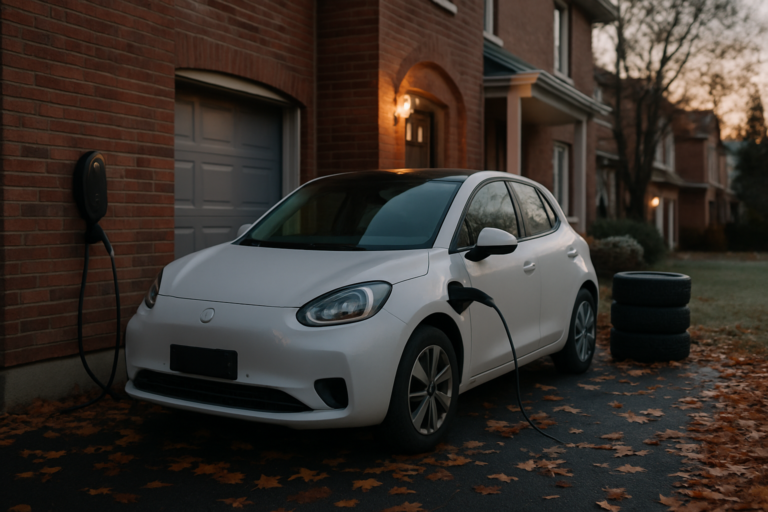
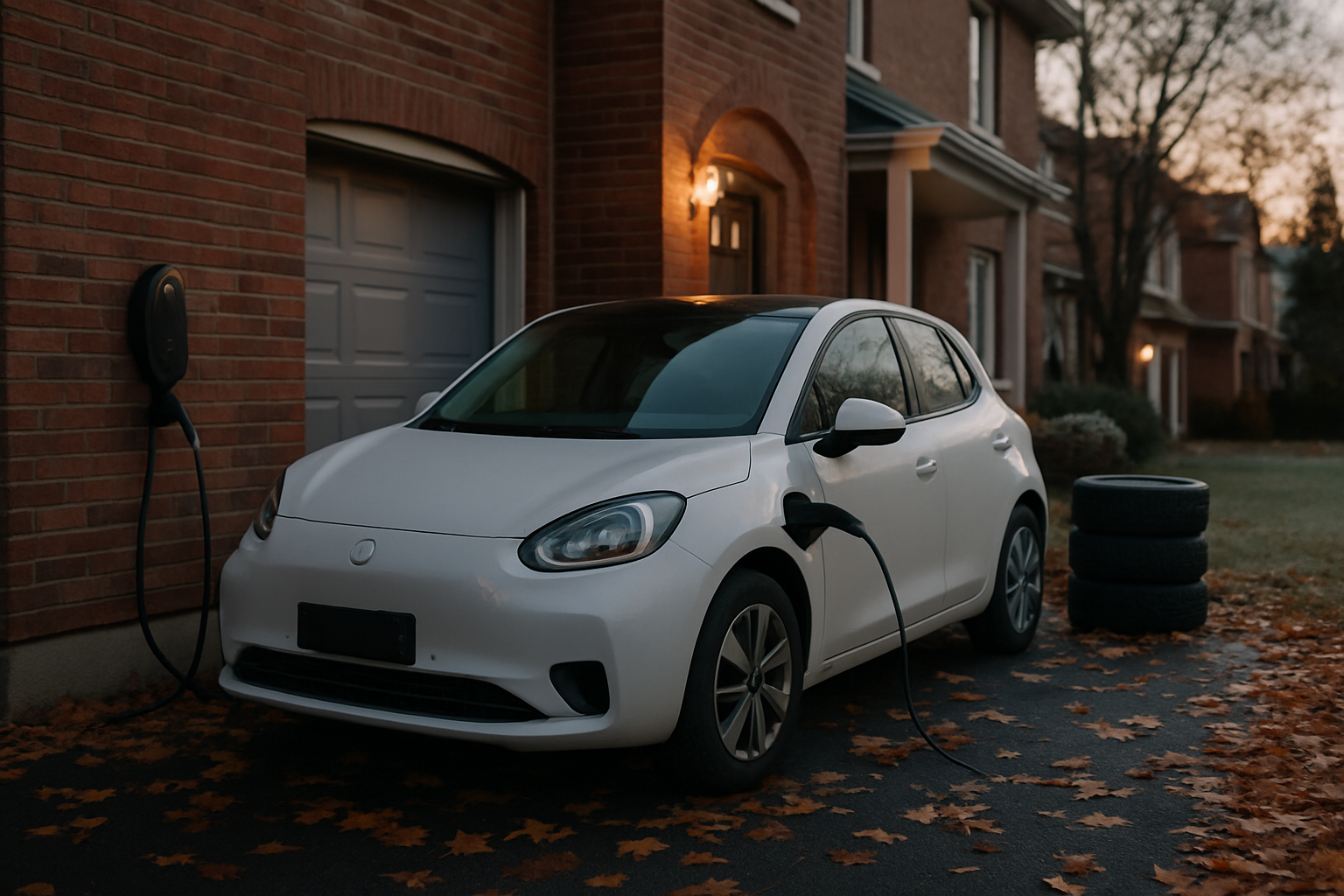
A charging station fixed to your home or garage usually falls under your home insurance rather than your car insurance, since it’s part of the property or attached to it. Depending on the contract, it can be treated as part of the building or as an improvement. The portable charging cable travels with the car, and its protection varies from contract to contract.
If you’re a tenant or co-owner, the situation becomes complicated: you may own the station, but the wall and electrical connection belong to someone else. Obtain written permission from the owner or condo board and notify your insurer of the installation.
Quebec’s cold reduces range, sometimes significantly. This isn’t an insurance issue per se, but it changes your charging habits, your roadside stops, and therefore your actual mileage.
- Have the station installed by a licensed electrician and keep the invoice and certificate.
- Inform your home insurer of the addition, especially if the station is in an attached garage.
- Ask if the cable and accessories are covered in case of theft from the vehicle or outside.
- Check if damage to the charging station caused by lightning or power surge is included.
- Note the station location if you move: coverage doesn’t automatically follow.
Entrepreneur or self-employed: when your personal car isn’t enough
Using your personal electric or hybrid vehicle to meet with clients, deliver orders, or transport materials changes the nature of the usage. A personal contract may exclude certain business uses or accept them with conditions. It’s better to ask the question straightforwardly than hope it goes unnoticed.
When the car becomes a production tool, with installed equipment, daily delivery routes, or commercial identification, you move toward commercial vehicle insurance. Starting with three vehicles, it becomes worthwhile to look at fleet insurance.
Your business insurance doesn’t replace car insurance, but the two should complement each other: commercial liability, business property, and vehicle usage. For tax aspects related to business mileage, contact your accountant.
- Distinguish between occasional client visits and regular commercial use.
- Clarify whether you transport tools, equipment, or valuable merchandise.
- Ask if professional contents are covered in the vehicle: they are often excluded from a personal auto contract.
- For a company electric vehicle, confirm where charging occurs and who owns the station.
- Keep a simple log of business mileage: it serves both your insurer and accounting.
Fall check-in: the checklist to go through before the first snow
By the end of October, days grow shorter, the first frosts arrive, and tire changeover approaches. It’s a good time to review your file. Plan about twenty minutes, with your documents handy.
If something has changed, contact your insurer before month-end rather than at claim time. And if your premium jumped at the last renewal, understanding the reasons for an increase helps distinguish what’s due to your file from what’s due to the market.
- Note the odometer and compare it to the mileage recorded in your contract.
- Reread the usage declaration: commute, remote work, business, carpooling, or delivery.
- Confirm the list of drivers: new license, child, spouse, or roommate.
- Ask if a winter tire discount is offered and what proof to provide.
- Check the charging station, cable, and notice given to your home insurer.
- Review your deductibles and towing conditions before the cold season.
Frequently asked questions
Do I need to notify my insurer if I work from home?
Yes, if your regular commute has changed noticeably. The number of office days and distance traveled can influence your premium. A simple call allows you to update your file and avoid surprises.
What happens if my actual mileage exceeds what I declared?
A slight discrepancy is normal, since no one predicts their trips perfectly. However, a large or repeated gap can be a problem depending on contract terms. If your situation changes, adjust your declaration with your insurer.
Does an electric car cost more to insure?
Not necessarily. The premium depends on the vehicle’s value, repair costs, your profile, and the insurer chosen. Premiums vary by profile, so comparing multiple offers gives a better picture.
Is a charging station covered by car insurance?
A charging station fixed to the property is generally covered by home insurance, according to contract terms. The portable cable and certain accessories may fall under other guarantees. Ask your insurer to specify each element in writing.
Is a plug-in hybrid insured like a gas vehicle?
It is often evaluated separately, because of its battery and purchase value. Make sure your contract specifies the powertrain type. Also compare the treatment of the battery in case of damage.
Can I use my personal car to deliver meals or provide ridesharing?
Often no, at least not without prior notice to your insurer. Transporting passengers or delivery for compensation is frequently excluded from a standard personal contract. Check before starting, as tailored solutions exist.
Does cold and snow change coverage for an electric car?
No, coverage doesn’t change with the weather. What changes is range and charging habits. Most importantly, verify your towing conditions and deductible before winter.
Is a usage-based driving program worth it?
It depends on your driving habits. If you drive little and carefully, it can be beneficial, but it’s not guaranteed. Ask what data is collected and whether it can only lower your premium or also raise it.
A contract that fits your real life
Your usage, mileage, and powertrain type together tell how you use your vehicle. The more accurate this information, the fewer surprises at claim time. Take a few minutes before winter to review everything, ask your questions, and compare options at your leisure.
On AccesDirect, you compare online offers from licensed partner brokerages and agencies in your province. The service is free and with no obligation.
Compare offers that account for your real usage and your vehicle.
Compare auto →Also read: Car insurance in Quebec · Business insurance · Home insurance in Quebec
Une seule requête
Remplissez un profil unique. On interroge les assureurs à votre place — vous ne recommencez jamais.
Sans engagement
Comparer ne vous engage à rien. Vous choisissez qui contacter — ou personne. On ne revend pas votre numéro.
Réseau pan-canadien
Auto, habitation, moto, VR. Des cabinets et courtiers partenaires licenciés partout au pays.
Le meilleur prix vous attend.
Comparez en 3 minutes. Choisissez votre couverture. Aucun rappel commercial forcé.