ATV stored, snowmobile ready: fall insurance checklist
The leaves are falling, the ATV is on its last rides and the snowmobile is waiting in the back of the garage. What do you need to verify on your insurance as you transition between seasons? Here’s a fall checklist for your recreational vehicles, whether they’re used for leisure, hunting or work.
Why mid-October is the right time to review your coverage
In Quebec, mid-October marks a lull between two seasons. Frost is settling in, forest outings become rarer and snowmobile trails typically open after the first big snowfalls, usually in December or January depending on the region. It’s the ideal time to review your contracts without pressure, before the snow arrives and everyone gets busy.
ATV, side-by-side and snowmobile policies are typically annual, even though usage is seasonal. A purchase, a sale, adding a winch, a snow blade or a cabin, moving or a new storage location: each of these changes can affect what’s covered. It’s better to report them to your insurer before a claim than after.
Before reading your contract, gather a few pieces of information that will save you time:
- Your current policy and renewal date
- The serial number of each vehicle and trailer
- Invoices for accessories and modifications
- Recent photos of each vehicle from multiple angles
- The exact address and type of winter storage location
Storing your ATV or side-by-side: what remains covered
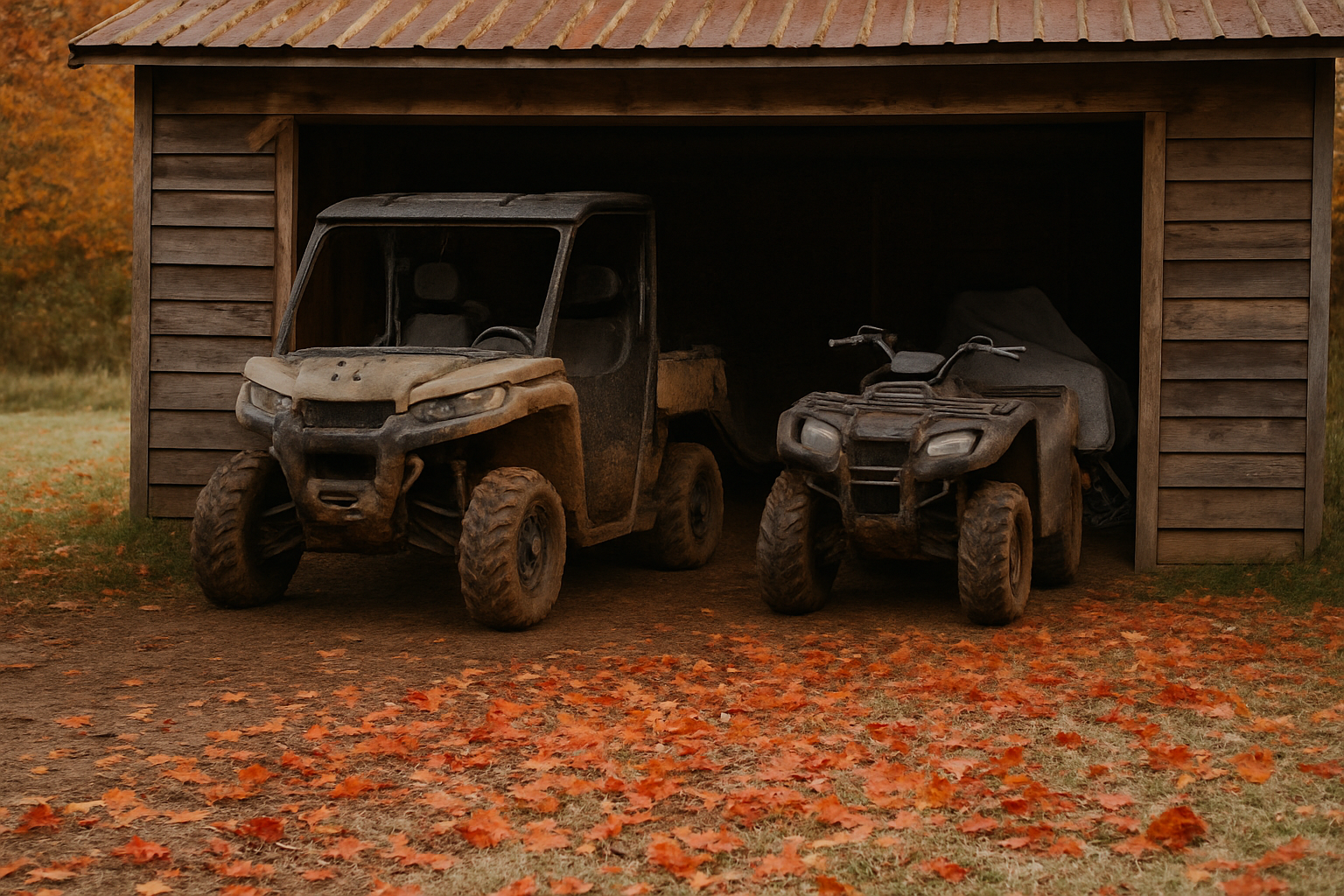
A vehicle sleeping in the garage isn’t safe from risk. The hazards simply change in nature: fire caused by a battery charger left plugged in, theft from a poorly locked shed, rodent damage, or a shelter roof collapsing under snow weight. These are situations where protection against non-collision damage plays its full role.
The right decision depends on the vehicle’s value, its storage location and your risk tolerance.
Keep comprehensive protection
For a recent side-by-side or valuable ATV, maintaining protection against theft, fire and vandalism remains the simplest approach. You don’t have to reinstate anything in the spring and you avoid an unintentional coverage gap if something happens in January.
Reduce protection during winter storage
Some insurers allow you to adjust your contract during winter storage, others don’t. If this option exists, ask for the conditions in writing: which protections remain active, what is the effective date, and how to proceed if you take the vehicle out on a warm afternoon. Removing protection against damage means that a fire or theft would not be covered, which is rarely an interesting saving for a vehicle worth thousands of dollars.
What about your home insurance?
It’s often assumed that home insurance protects what’s stored in the garage. For off-road motorized vehicles, coverage is usually limited or excluded. Read the motorized vehicles section of your home insurance and ask directly: is a stolen side-by-side from the shed covered, and up to what amount?
Last fall outings: hunting, firewood and forest roads
Fall is when the ATV and side-by-side work hardest: you’re transporting hunting gear, collecting firewood, navigating muddy forest roads. These uses are common, but they raise questions that the policy doesn’t always address obviously.
First point: the number of passengers. A four-seater side-by-side invites everyone on board, but occupant coverage depends on your contract. Second point: liability. If you damage a fence, a crop or a private road, it’s the liability coverage that responds, within the limits provided. Third point: breaks in the forest, which can be expensive in towing if no assistance is provided.
A few questions to ask your insurer before the next hunting weekend:
- Is recreational hunting included in your declared use?
- Are passengers protected, and under what conditions?
- Is towing or trail assistance offered?
- Is the vehicle covered on private land that isn’t mine?
- Are accessories (winch, luggage rack, gun holder) declared?
- Are the liability limits appropriate for my use?
Preparing your snowmobile: what to verify before the first snow
To operate on trails, a snowmobile must meet registration, trail access and liability requirements. The details and amounts required are set by the competent authorities and clubs in your region: validate them with them rather than relying on what you hear at the local gas station. The content of a policy can also vary from one insurer to another, particularly for damage protections, insured value and accessories.
If you want to explore the protections offered in depth, our snowmobile insurance guide details the standard coverages. And if you’re simply looking to validate your options before the season, this snowmobile quote process explains how to organize the comparison.
Insured value and accessories
A snowmobile loses value over the years, but accessories accumulate: tall windshield, heated grips, bags, GPS. Check if your contract includes them automatically or if they’re limited to a specific amount. Keep receipts: they facilitate any claim.
The trailer and transportation
If you’re transporting your snowmobile north or to another resort, the trailer has its own status. Depending on the contracts, it may be covered automatically, partially or not at all. Also confirm that your tow vehicle insurance is adequate and that the cargo is protected during transit.
Off-road accidents and public insurance
The public accident compensation scheme administered by SAAQ primarily targets accidents involving a road vehicle. An off-road accident without a road vehicle is generally not covered in the same way. Check directly with SAAQ for your situation and verify if your private policy provides benefits for bodily injury.
Utility side-by-side: when recreation becomes work
Many entrepreneurs and agricultural producers use a side-by-side to snow plow a parking lot, inspect a work site, transport tools or monitor a maple grove. Once the vehicle generates income or serves business activities, the distinction between recreational and commercial use becomes important. A personal policy is designed for recreation: a claim occurring during undeclared commercial use may be denied.
If this applies to you, talk frankly with your insurer. Depending on the situation, mixed use may be accepted with adjustments or may require coverage designed for business vehicles and activities. Also consider commercial liability if employees or customers ride along or if the vehicle operates on a third party’s property.
The following situations deserve clear verification:
- Snow removal or land maintenance for a customer
- Transporting tools, employees or materials on a work site
- Use on a farm, maple grove or outfitter
- Occasional rental or lending the vehicle to a third party
- Adding a blade, box or specialized equipment
What influences premium and how to do your review in five steps
ATV, side-by-side and snowmobile premiums vary according to your profile. As a guide, a recreational ATV or snowmobile might cost a few hundred dollars per year, while a recent side-by-side or powerful snowmobile often costs more. These are just rough estimates: the vehicle’s value, its power, the driver’s age and experience, intended use, region, storage location, anti-theft devices and your claims history all factor into the calculation.
Price matters, but the content of the contract matters just as much. Two quotes at the same price may offer very different protections. For an effective review, proceed step-by-step, ideally before the end of November:
- Reread your current policy: permitted uses, limits, deductibles, exclusions.
- Update information: accessories, address, drivers, use.
- Decide on coverage level during storage, comparing vehicle value and deductible.
- Request comparable quotes, with the same protections and deductibles, from more than one source, including for insurance for your tow vehicle.
- Keep written confirmation of all adjustments, including coverage modifications.
Frequently Asked Questions
Should I keep my ATV insurance active during winter?
It depends on what your contract provides and the vehicle’s value. Keeping at least protection against theft and fire is a prudent approach, since these risks exist during storage too. If your insurer allows reduced coverage, ask for the conditions in writing.
Does my home insurance cover an ATV or snowmobile stored in my garage?
Generally, coverage for off-road motorized vehicles is limited or excluded in a home policy. You need to check the specific clauses of your contract. A dedicated vehicle policy usually offers more appropriate protection.
Can my recreational side-by-side be used for snow removal at a customer’s property?
Not necessarily without informing your insurer. Use that generates income is often considered commercial, and a personal contract may not respond in the event of a claim. Declare your actual use to verify if an adjustment or business protection is required.
Is hunting covered by ATV insurance?
Hunting practiced as a hobby is often included in recreational use, but this isn’t universal. Ask whether transporting passengers, equipment and game is covered, and whether your liability applies on the land where you operate.
Is my trailer covered when I transport my snowmobile?
Trailer coverage depends on the contract, both for the towing vehicle and the trailer itself. It may be included, limited or excluded. Also check what happens to the cargo during transport.
Does SAAQ compensate for injuries from a snowmobile accident?
The public scheme primarily targets accidents involving a road vehicle. An off-road accident without a road vehicle is generally not covered in the same way. Check directly with SAAQ and verify if your private policy offers benefits in case of injuries.
When should I request quotes for snowmobile season?
Ideally in late fall, before the first snow, to have time to compare without rushing. Comparing in November also gives you time to modify a contract before your first outings. Premiums vary by profile, so comparable protections are essential for evaluating offers.
Which accessories should I declare to my insurer?
Declare any equipment added that increases the vehicle’s value or changes its use: winch, snow blade, cabin, windshield, GPS, audio system, modified suspension. Keep receipts and photos. An undeclared accessory could be limited or even uncompensated after a claim.
An up-to-date contract before the snow falls
Reviewing your insurance in October takes little time and avoids nasty surprises during winter. Storage, hunting use, snowmobiles, work side-by-sides: each situation has its own details and the policy must reflect reality. Ask specific questions, keep your confirmations in writing and compare equivalent protections before deciding.
On AccesDirect, you can compare online the offers from partner brokers licensed in your province. The service is free and with no obligation.
Compare your options for ATV, side-by-side and snowmobile before the first snowfalls.
Compare now →Also read: Recreational vehicle insurance · Home insurance in Quebec · Insurance for businesses
Une seule requête
Remplissez un profil unique. On interroge les assureurs à votre place — vous ne recommencez jamais.
Sans engagement
Comparer ne vous engage à rien. Vous choisissez qui contacter — ou personne. On ne revend pas votre numéro.
Réseau pan-canadien
Auto, habitation, moto, VR. Des cabinets et courtiers partenaires licenciés partout au pays.
Le meilleur prix vous attend.
Comparez en 3 minutes. Choisissez votre couverture. Aucun rappel commercial forcé.